About
"From Nature" is a cooperative information system on the subject of species diversity, providing a standard framework for collecting, organizing, and presenting data that were not sampled in the context of scientific research, or even by researchers.
Research on biodiversity in the country is entrusted to professional bodies, which use databases for monitoring and research purposes. The majority of the data found in databases originates in academia. Note that their primary goal is not long-term monitoring, but rather the research purpose for which they were collected. Information coming from the public is hardly represented there, among other things because of difficulties in verifying and organizing the information. The system from Hasedeh was developed to overcome these difficulties and to enable the public to contribute to the collection process. In several respects, collecting information in a cooperative system has advantages over traditional methods: the use of mobile devices and the Internet makes it possible to survey large areas at a high pace. The information received is monitored, and it is also adapted to the required formats for integration into the recorded databases. Through educational guidance, the structure of lessons and educational programs is written to embed the system in schools. In this way, the special advantages of the continuous and large-scale sampling process are harnessed for public and scientific purposes alike.
The advantage
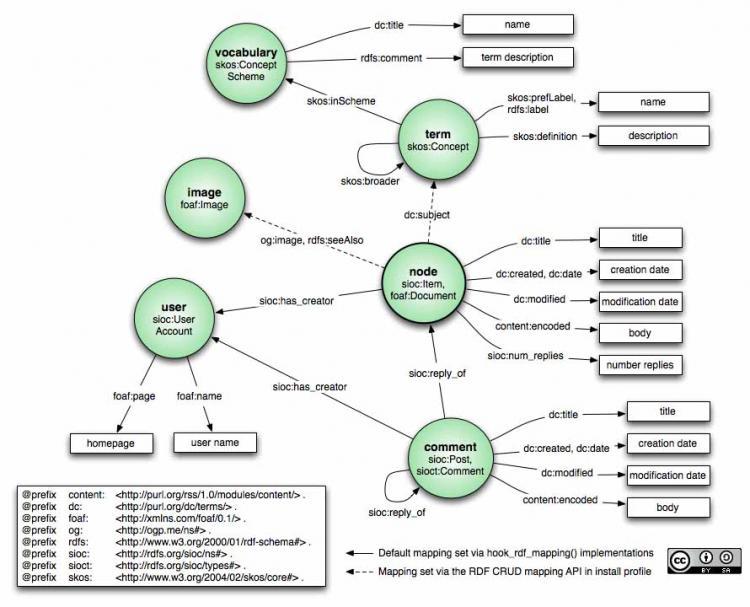
in from Hasedeh is a content management system (CMS - Content Management System) of the Drupal type (7.0 (Drupal), an open-source software (open source) supported by a large group of key developers. The system is written mainly inPHP with integration of css andjavascript, and provides xhtml code for interfacing with databases (of the MySQLtype). By combining this with location data, patterns emerge by frequency and by distribution of species. By combining it with the user's personal data, it allows them to monitor their activity, geographically anchor the content, and engage the public with it.
Drupal is used by about one million people in 228 different countries around the world. The software company SoftTailors Ltd. adapted the system for managing information on species diversity, taking into account the requests of researchers, teachers, and enthusiasts, according to their formulation by the content managers at "From Hasedeh".
Data collection
The information was collected via the Internet and cellular networks into a content management system, where the data are monitored. In several respects, collecting information in a cooperative system has advantages over traditional methods, as a number of the findings displayed on the site clearly demonstrate:
Many wilderness areas have hardly been surveyed at all in various studies, so it is not surprising that surprising findings (apparently) were discovered there.
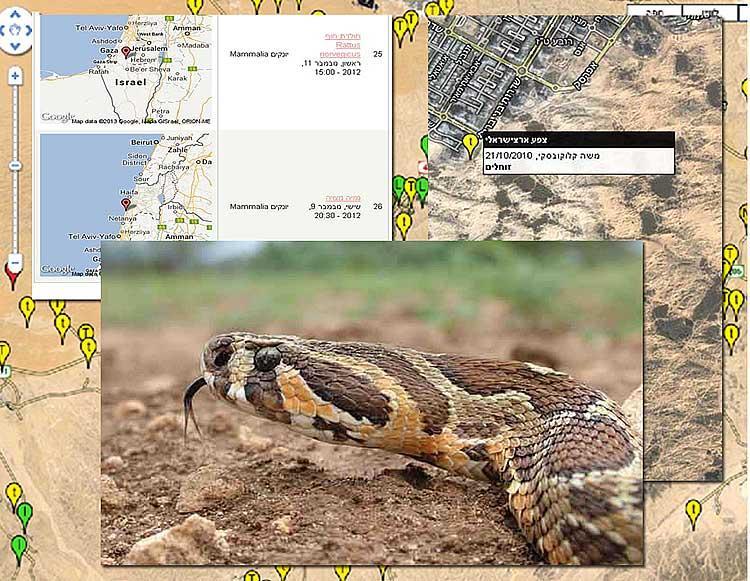
Information originating in academia was collected within the framework of time-limited research, which addressed specific field sites, with a budget and human resources, and therefore, in essence, focused on certain objectives defined by the research topic. These constraints do not apply to the public system. Information in Hasedeh is received sequentially from all regions of the country, including locations that are sampled very rarely, or not at all.
The information collected also includes samples, including photos and recordings, which makes it possible to monitor and analyze the data after it has been reported. The textual information is categorized (taxonomy, folksonomy) as well, which gives it practical value for enthusiasts and encourages their participation.
There is a separation between managing the information displayed on the web and the information stored in the databases. This means that a non-professional public can be used to collect data for scientific applications. The data that were selected and classified as suitable for this are displayed on maps on the system's website. The user is allowed to display the information by different slices, according to their needs. Displaying the information by location slices, for example, enables the user to gain an impression of the distribution of species in the area where they live and throughout the country, to know which species they are likely to encounter in the place they plan to visit, and more.
Sound and location samples
The system provides the viewer with guidance materials and tools for conducting surveys.
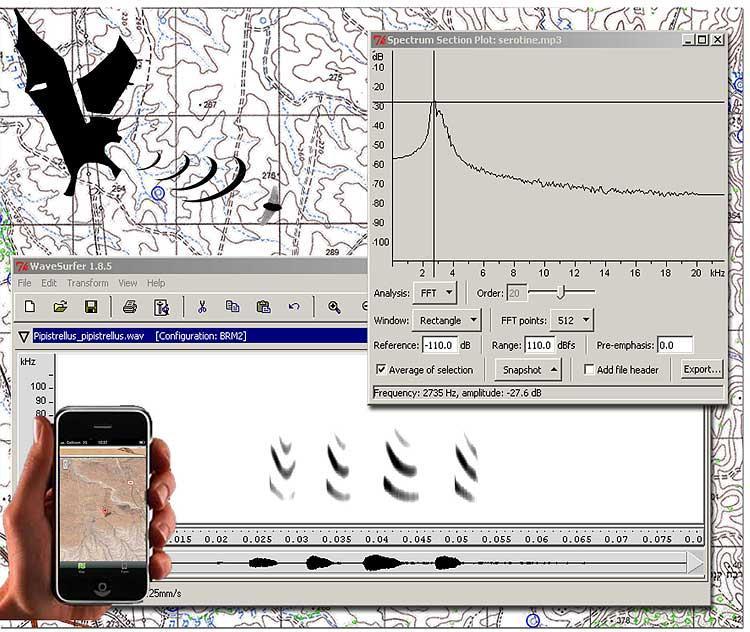
In the photo: an ultrasonic detector, used to survey bats, connected by a cable to a mobile phone. During the survey process, the sounds are recorded with the help of a dedicated application installed on the phone. Location data are sampled using HTML5 Geolocation API, a method that also makes it possible to determine the location of devices without built-in GPS . Survey details are sent via cellular networks directly to the system's database.
The remote user is not required to have knowledge of digital sound analysis, or to know any other complex technical skill.
Nature conservation
Some of the most important environmental struggles in the country have failed, despite the strict stance of academia against them: proof of the scientific importance of the subjects of struggle is not enough; public involvement must be intensified and given social content. With the help of this system, students can now identify the species of living organisms in their surroundings, consult chapters of knowledge, involve other students in their findings from the school grounds, and even consult colleagues and professionals. In addition, through the system the data are available in a way that also enables the authorities to use them, while the samples that are collected provide a basis for scientific work. Environmental actions, especially in populated areas, take place over very large areas and at a very fast pace, which the usual collection methods do not achieve. The ability to use the existing information banks for nature conservation purposes is limited. They are not up to date and are not updated routinely. "Of Hasdeh" bridges these gaps by making the public an active and important partner in gathering information. It provides it with tools needed for social needs and, in return, equips it for scientific applications. And in this way many findings have been discovered, and public involvement in nature conservation is increasing. Whereas in the past photographic equipment, global positioning systems (GPS), and ultrasonic detectors were the preserve of academia, nowadays we see them very widespread, so the public can be used for monitoring and interfacing. This is required in the educational-pedagogical aspect, and essential in the nature-conservation aspect. In the system's databases, findings accumulate steadily, requiring renewed handling and evaluation with regard to the threats facing species diversity.