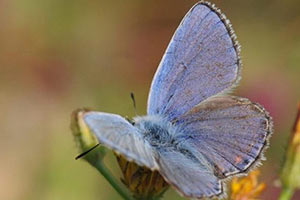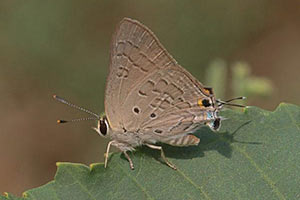

Lycaenidae
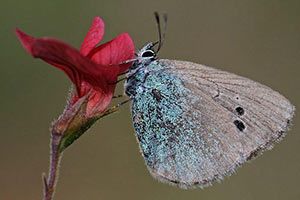
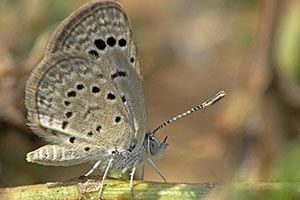
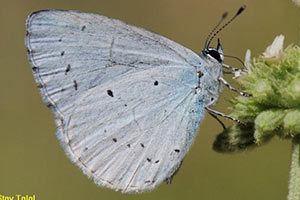
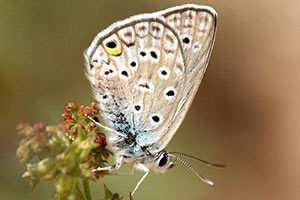
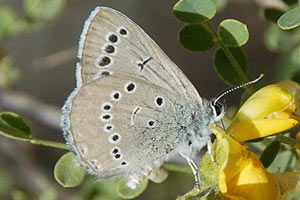
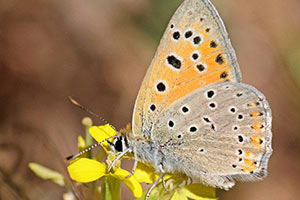
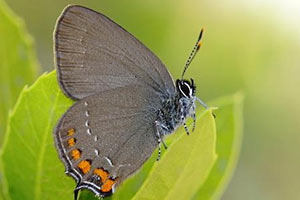
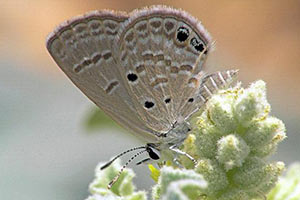
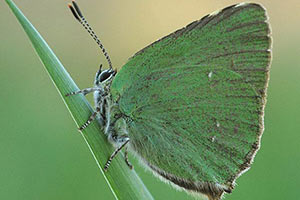
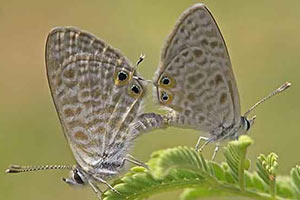
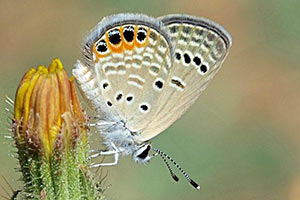
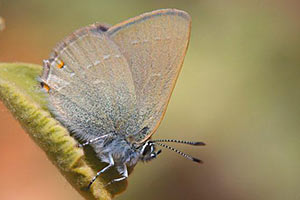
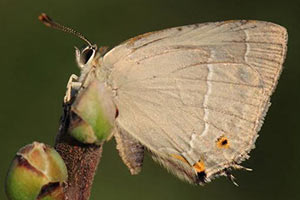
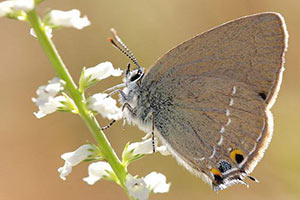
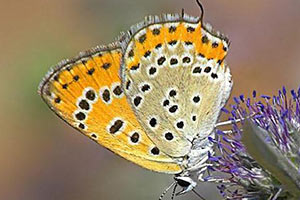
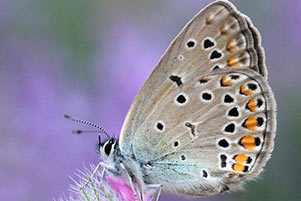
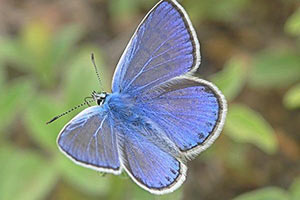
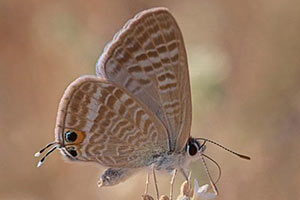
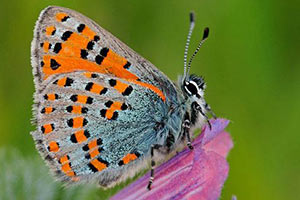
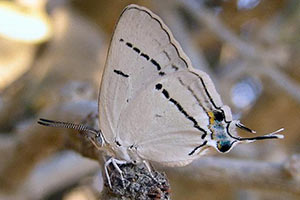
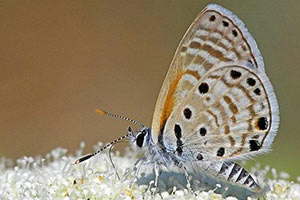
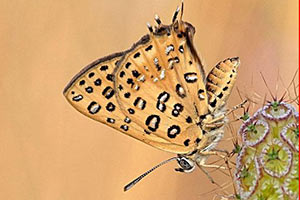
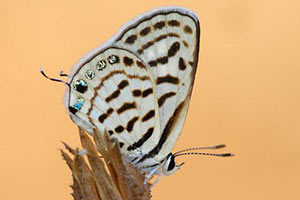
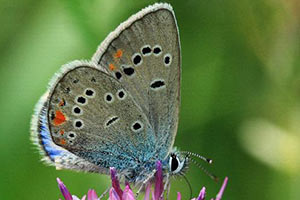
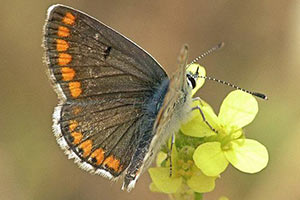
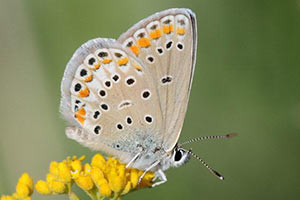
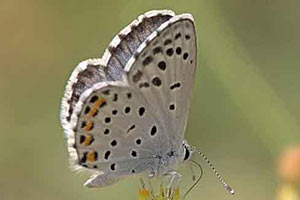
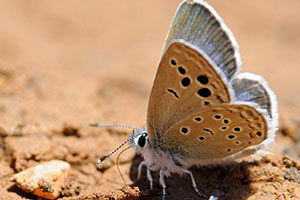
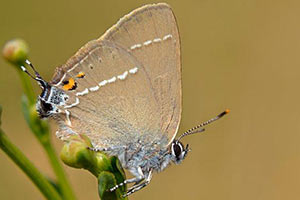
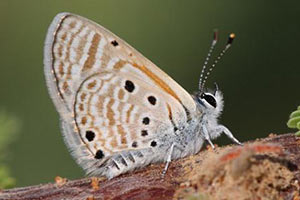
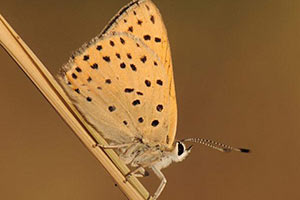
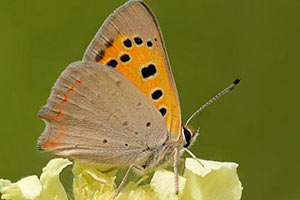
This is one of the largest families among butterflies, with more than 5000 species. They are widespread throughout the world. In the Palearctic region, this family comprises about 25% of all butterflies. Members of this family are the smallest of the butterflies and are usually sexually dimorphic. The male is a shiny blue or copper color, and the female is usually brown. Many of them have a delicate, thin tail at the tip of the hindwing and sparkling "eyes" beside it. Many researchers attribute this form to a "false head": a predator that tries to attack the butterfly will attack the false head—the less important area of the butterfly—and thus the butterfly will escape predation.
The egg is round and flattened, with bumps or depressions. The larvae are small and bulky and feed on leaves and fruits. Larvae of some species secrete a sweet liquid that attracts ants, which take them and guard them in their nest; there are larvae that also feed on ant grubs. The pupa is of the girdled chrysalis type and pupates on the host plant or on the ground.
In Israel and Sinai there are about 50 species. About 20 of them are common only in the Hermon and northern Golan, and about 10 in the Arava and the Jordan Valley.
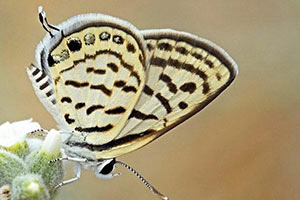 Balkan blue | 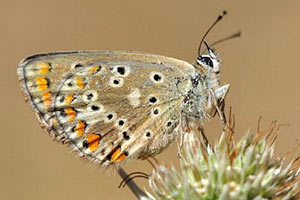 Grayish blue | 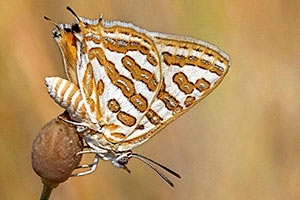 Striped ant-blue |
|
|
|
|
|
|
|
|
|
|
|
|
|
|
|
|
|
|
|
|
|
|
|
|
|
|
|
|
|
|
|
|
|
|
|
|