
Ardous Damselfly Sympecma Fusca
English name: Common Winter Damselfly
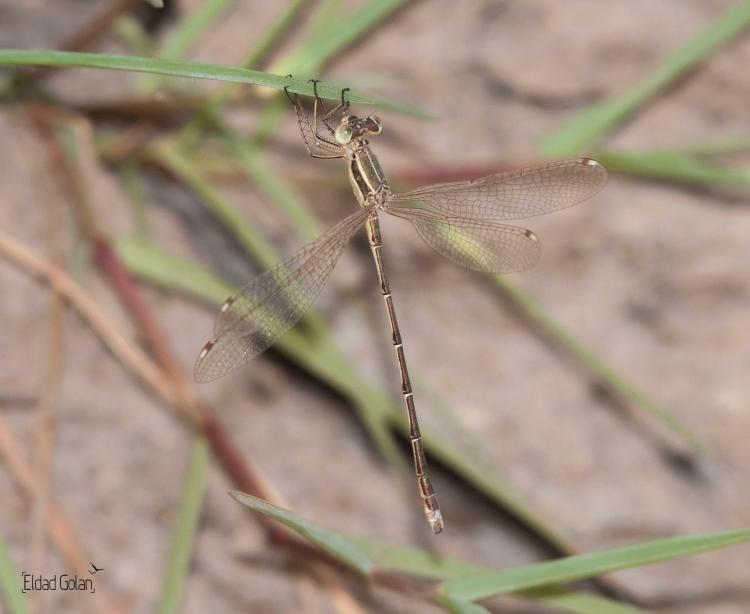
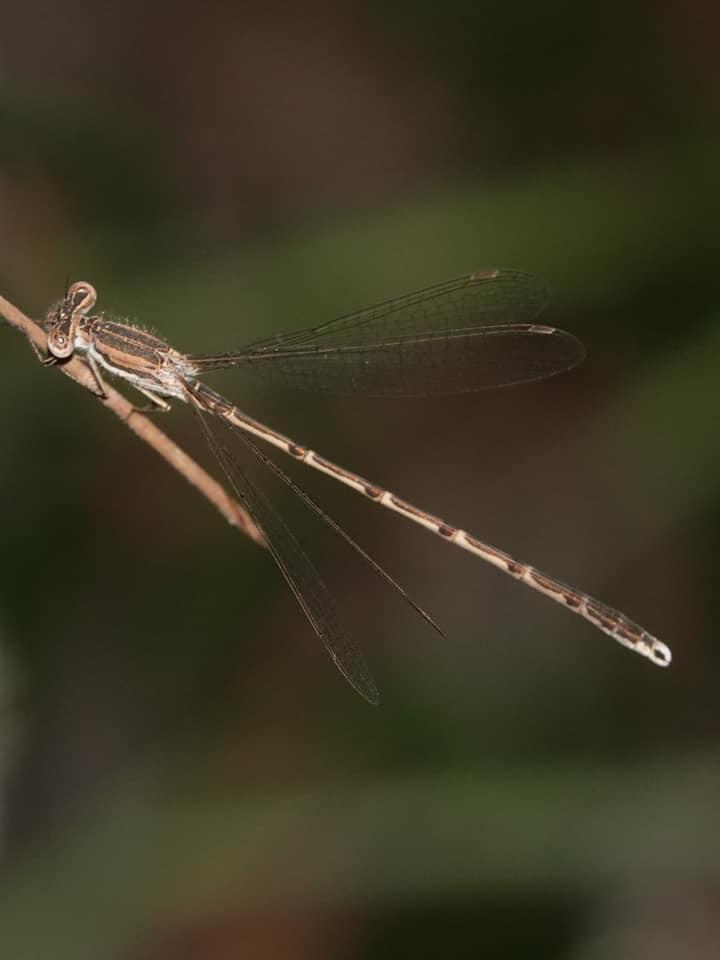
Unlike the other members of the family Lestidae, the damselfly holds its wings pressed together and resting alongside the body. This wing posture is uncommon in dragonflies.
Members of the family Lestidae (Lestidae) were given their name because of the shimmering metallic flashes of color that characterize them. And likewise, the genus Sympecma is named after this flash (shaviv)..
Size: Medium damselfly (3.5-4 cm).
Habitat: Shallow, still bodies of water with abundant bankside and aquatic vegetation. It also does not shy away from slightly brackish water.
Like all members of its family, the female lays her eggs on aquatic plants. But unlike them, the eggs hatch quickly and the nymphs also develop at a rapid pace. The adults develop in late spring and move away from the water, thus spending the winter until the next spring, when they return to the water and lay eggs (hence its English name).
Distribution: Most of Europe (except the far north and Britain), North Africa, and as far as Central Asia.
In the past it was not common. Rarer in the center than in the north.
Season: Seen in bodies of water mainly from late March to mid-August. But because of its unique way of life, it can be seen year-round (according to data from Turkey and Europe).
Identification marks:
Members of the family in Israel differ from one another in the metallic color of the body and the color of the pterostigma (the colored cells at the wing edge).
The body color is beige on the lower part and has a bronze metallic hue on the upper part. The pterostigma is light brown.
At rest, the wings are held pressed together alongside the body; in this posture the pterostigmas on the wings do not overlap because their position is slightly different between the hindwing and the forewing.
In older individuals the pterostigma becomes dark and the eyes become blue.
Similar species:
There is no damselfly in Israel similar to the Ardous Damselfly.