
לכידת נחשים
Common Palestine viper (Daboia palaestinae) is a protected species and it is forbidden to harm it: all snakes in the country are protected by law. This is a venomous and dangerous snake that thrives in agricultural areas and is frequently seen in inhabited areas - including in cities in the center of the country. Among other things, handling encounters with a protected and dangerous species occurring in proximity to people is done through snake catchers: people who have been certified to catch protected snakes and received a permit to do so. The authorities' approach to this issue causes enormous damage to the natural environment, unnecessary killing of many animals, and harm to the status of nature conservation in the country as a whole.
Reviewing the reports received in the field reveals that the viper holds a very respectable place on the list. Given the nature of the data in the system, most of which are Presence-Only Data, nothing can be learned from this about the population status of the species. However, from the abundance of observations one should and ought to infer the danger posed to people living in sites where vipers are frequently observed. One can also learn about additional means of dealing with and treating the issue, but for that the authorities choose the worst way imaginable, the high price of which is paid by snakes and people alike. About 150 people are bitten in the country each year (100-300), and before entering into the discussion it is important to clarify:
1. A viper bite causes severe pain, which may accompany the victim for many days. Often it also leaves significant scars.
2. Deaths resulting from viper bites are extremely rare, mainly thanks to treatment with antivenom and the speed of the responders.

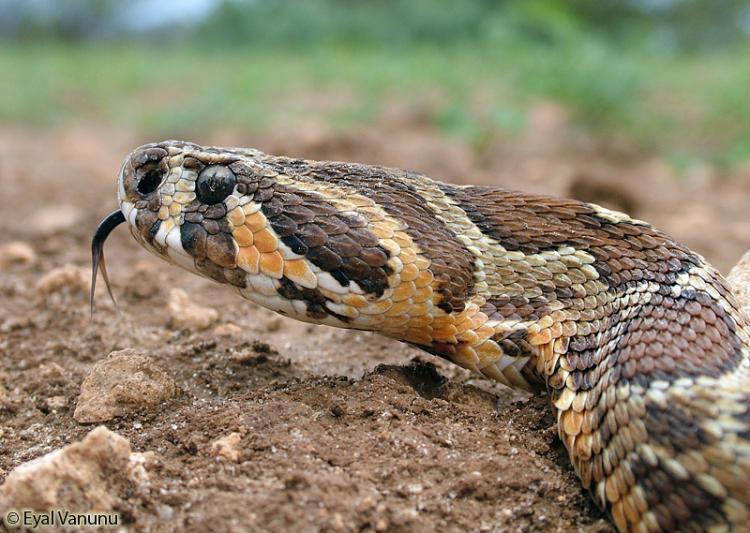
Common Palestine viper, Daboia (Vipera) palaestinae. Beit She'an Valley, 03/2017 © ברק דותן
May it be copied?
What is done with the caught snake (as required by law) in the yard of a house in a moshav or in a garden in the city? You guessed right! It is moved from its place and released into the wild. In some snake-catchers' sites and correspondence, it is even stated that the snakes are released far from a settled area. To remove any doubt: they are not returned to the place they came from, but rather moved away from the place where they were found (as noted, the species breeds in inhabited areas). Is there any other case in which a species that breeds in a settlement is caught and released in a natural area?
The potential damage from moving vipers to wild areas is enormous, but there is no need to worry: in general, the vipers are not transferred and released, and here lies the real damage in any policy of 'treatment'. Many snakes are killed. It should be assumed that visitors to the site have already read reports online about "a viper snake caught in a vegetable shop..." and the like, so we will clarify: stories that receive publicity describe only a very small part of the encounters between vipers and people. Not all citizens of Israel are members of a reptiles group on Facebook, and not כולם are avowed nature lovers. Many farmers, for example, encounter vipers every year in their fields and homes. The association receives from them reliable reports of very many observations of vipers, which are often also documented in photographs: no identification error has yet been found in these observations. In any case, it should be clarified that moving vipers from inhabited areas to wild areas is harm to species diversity and the natural environment: not only does the current method of action not protect the snakes, it also harms them.
Enough for the wise by hinting
At Field, we sometimes deliberately avoid dealing with topics whose irresponsible interpretation of publications about them may lead to harm to the natural environment. For this reason, no publication on the subject of wolves in Ein Gedi had yet been dedicated, and nothing has yet been written here explicitly about snake catching, except by hinting. We have delayed criticizing the way snakes are handled in the various institutions, out of fear of harming them (- the reptiles). The fear of harm to the natural environment has been replaced by a genuine concern that we all may drown in a sea of nonsense that has recently been spread through the various media channels, into which, surprisingly (apparently), professionals are also swept. In addition, we have found that in fact nature too is harmed by the shabby handling of those issues, so it seems there is no choice but to bring this onto our agenda. Warn people? Unlike the victims of the wolves in Ein Gedi, many of those bitten did not even leave their homes in order to enjoy a wildlife sighting. Vipirs breed successfully in the big cities and are frequently seen in yards and houses. I admit that I feel a little excited every time I meet a young viper near my home in Rehovot, but when I part from it in peace I wonder whether I should expect the next encounter with a local resident to end the same way.
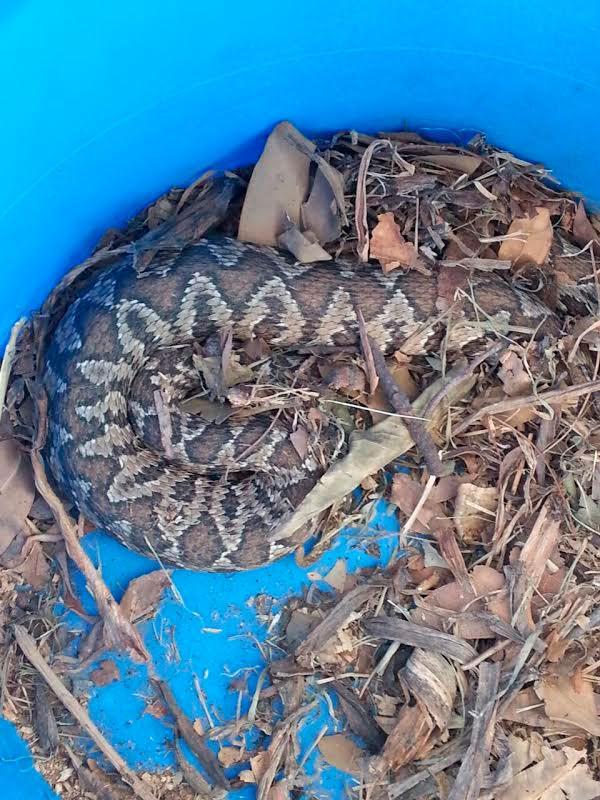
Common Palestine viper Vipera (Daboia) palaestinae. Carmel area, 19/06/2015 Field ©
..ולשטיא בכורמיזא
For many years, criminals were employed in the snake-catchers course at the Nature and Parks Authority criminals. The catchers (including some of my very good friends) pay for the training, and again each year pay a fee required in order to use the license. This is not an attempt to deal with the situation and protect the environment, but rather cynical exploitation of a small part of the population that uses the services of catchers - as required of every law-abiding person and as we also make sure to instruct. A large number of bites are caused as a result of attempting to catch snakes. There is no doubt that calling a catcher is the wise step in a case where a snake has been found in the house. Snake catchers should continue to be trained, thus ensuring that the animals are handled professionally. Unlike what is done today, the citizen should not be the one bearing the costs of the capture alone.
The dry law
In fact, not only does the existing law not protect the snakes, but often it serves as an excuse for killing them: since it is clear to everyone that the matter is completely neglected, anyone who kills a snake without calling a catcher is not punished for it. "All snakes are protected," but should all of them be treated the same? Everywhere? Should we expect all residents to call a catcher when a snake appears in their home? The current procedure harms snakes, and in the case of vipers the law in question is in fact a creative way to collect fees from catchers. Catching vipers (and likewise other species) that breed in inhabited areas and releasing them in open land (at private expense) is not a proven way to protect the snakes of the country. Anyone who wants to witness the folly with their own eyes is welcome to join me on a tour of the sands of the coastal plain and be impressed by the number of vipers found there.
I will conclude with a personal appeal to my colleagues in the authorities and various organizations:
Cooperating with criminals, collecting taxes for the purpose of severely harming the environment, hiding information from the public, cruelly destroying wildlife indiscriminately, destroying the coastal plain, vipers in the Negev, and more - we can handle it.
But please - stop using nature conservation as an excuse for this despicable activity; it is unbearable.
Eyal V.
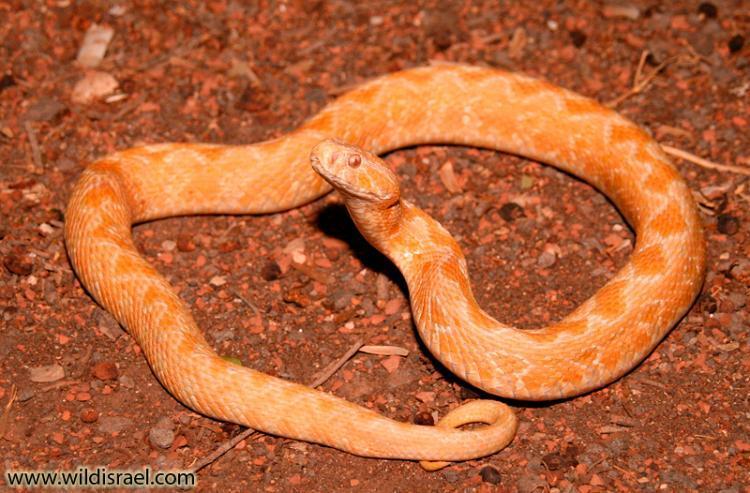
Common viper (Daboia palaestinae), albinism - extremely rare from the field ©