
Long-eared Myotis
Long-eared Myotis is a fairly small insectivorous bat (body length about 40-50 mm, forearm length about 41 mm, weight about 9 g), a cave-dweller and one that inhabits natural and artificial cavities. The ear pinna is relatively long, surrounding a slender, long and, as is customary among members of the genus Myotis, pointed tragus.
The species is named after an Austrian researcher בשם Johann Natterer, who is known to the public בעיקר בזכות the discovery of the South American lungfish, which he collected during his time in South America. In the country, the species inhabits caves, dense woodlands, and even buildings: including those occupied by people.

Long-eared Myotis, Myotis nattereri. The tragus has a characteristic genus-specific structure © עזרא חדד
Long-eared Myotis is known from sites in the north of the country, as well as in the Shephelah and in Judea. Five individuals that were photographed were roosting inside a water cistern in the Lahav area, marking the southernmost location in the country where the species has been observed.
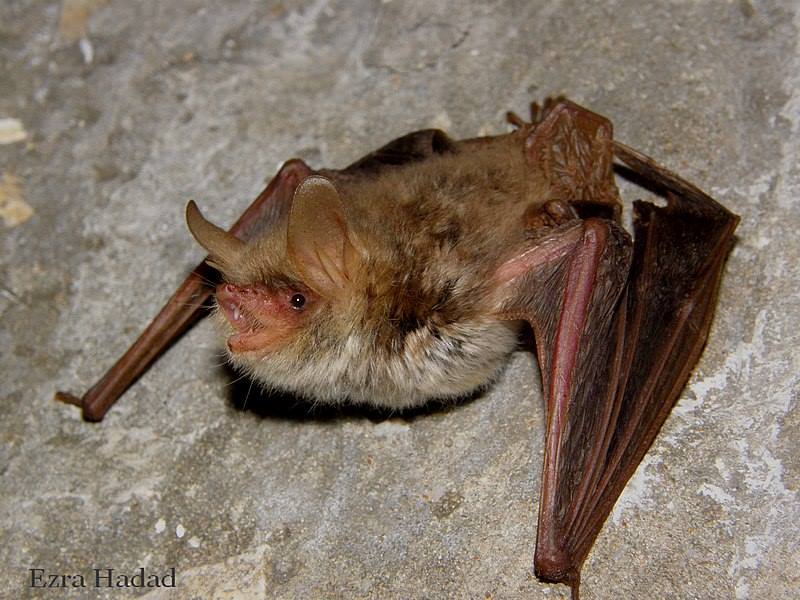
Long-eared Myotis, Myotis nattereri. The tragus has a characteristic genus-specific structure © עזרא חדד
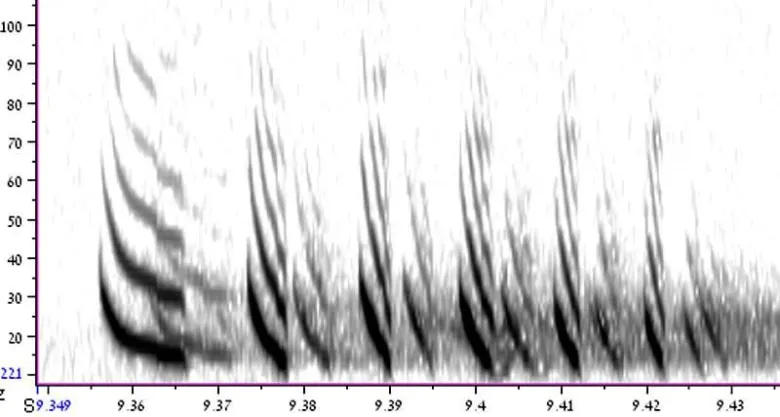
Frequency: 35-45 (25-75) kh
Recordings and histograms on the page Long-eared Myotis in the sound library
Links
bio.bris.ac.uk
Long-eared Myotis on the IUCN website
South American lungfish