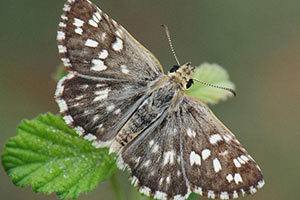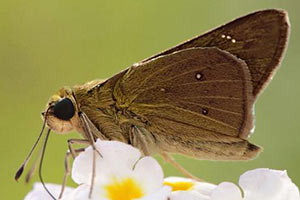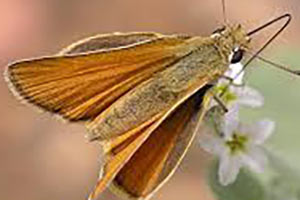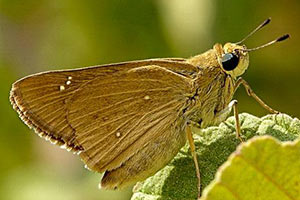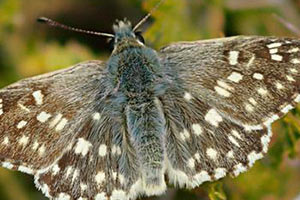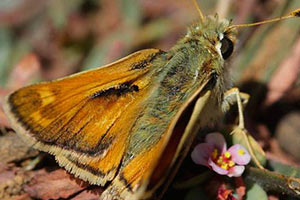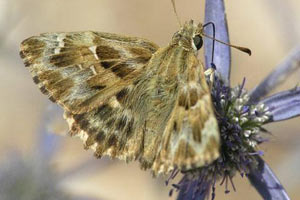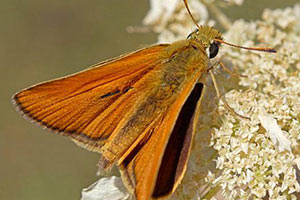

Skippers Hesperiidae
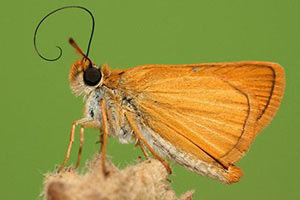
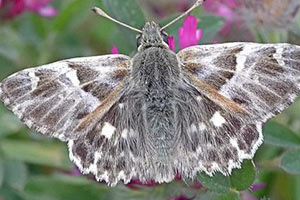
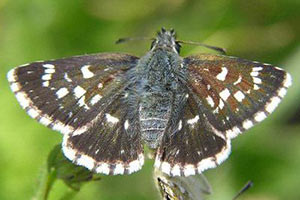
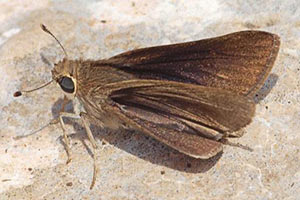
A family that differs in body structure and way of life from other day-flying butterflies. It includes more than 3500 species, most of them tropical. In South America live more than half of the species of the family. The head is broad and the thorax is developed (as in most moths) and has strong flight muscles that give it rapid flight. The wings are short and at rest they are held over the back like moths; sometimes they are closed, perpendicular to the body, like day-flying butterflies. The butterflies are small and usually in dark shades of brown-gray.
The eggs differ in shape: from round to flattened and elongated, from smooth to those with protrusions or ribs. The larva is cylindrical, covered with short hair and has a large head. Usually, the larva spins a shelter among the leaves and hides there. The pupa is found in a sparse cocoon among the leaves, held to a leaf at its rear end; in some species the pupa is of the girdled pupa type.
In Israel there are about 20 species, most of them similar to one another and the distinction between them is difficult.
|
|
|
|
|
|
|
|
|
|
|
|