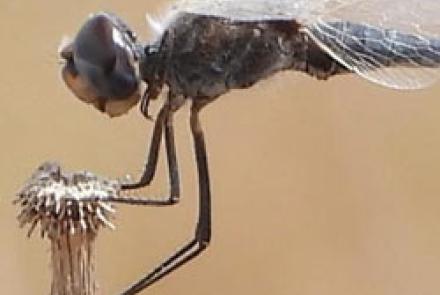

Pygmy bluet Agriocnemis sania
English name: Nile Wisp
Size: Tiny damselfly (about 2 cm).
Habitat: Standing water mainly, but also streams and slowly flowing rivers in an open landscape that is rich in herbaceous vegetation.
The pygmy bluet tends to stand motionless in the grass. Because of this behavior pattern, and because of its small size, it is very hard to find.
Distribution: Israel, Egypt, Libya, Sudan, Ethiopia, and Kenya.
In Israel it was previously found in the Jordan Valley; its population gradually declined until the last sighting was in 1987 in the Yarmouk, and since then it was considered an extinct species.
In 2014 it was discovered by Ra Shesh in the Golan Heights; since then populations have also been found in the Jordan Valley and the northern coastal plain.
Season: In the country it flies at least from May to November.
Identification marks:
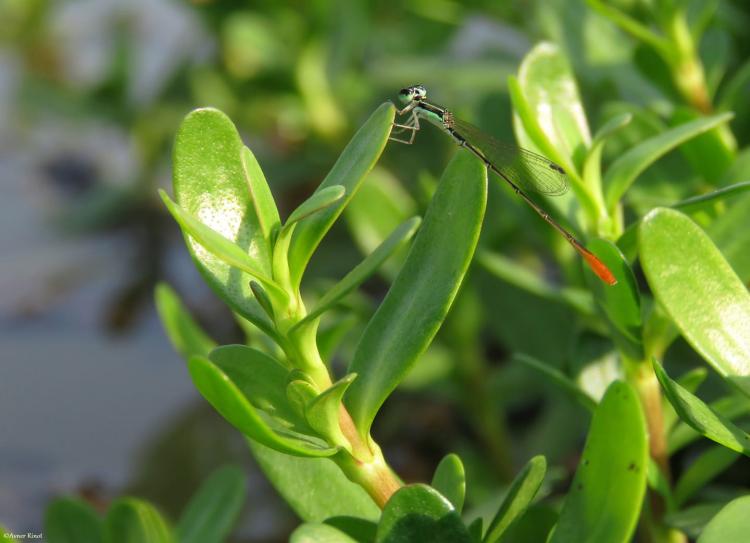
Male - the thorax and abdomen are black on the dorsal side and green on the ventral side. Only narrow green antehumeral stripes stand out against the black background.
The tip of the abdomen from the eighth segment onward is bright orange.
Female - two forms exist:
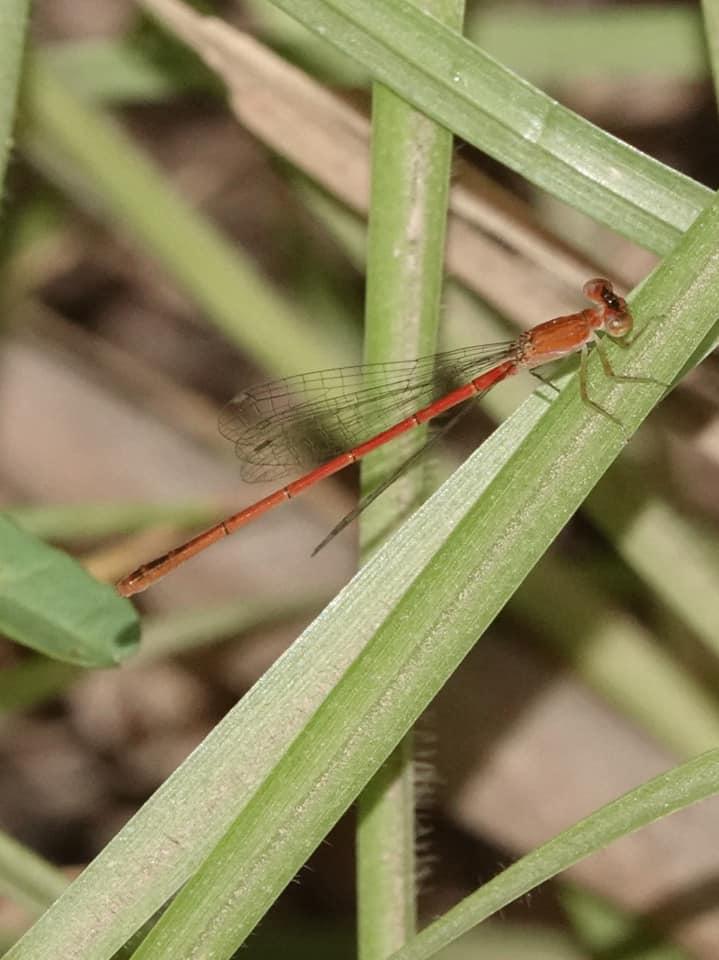
Orange form - the more common form. The females of this form are almost entirely orange. Only at the tip of the abdomen (segments 8-10) are there dark spots on the dorsal side.
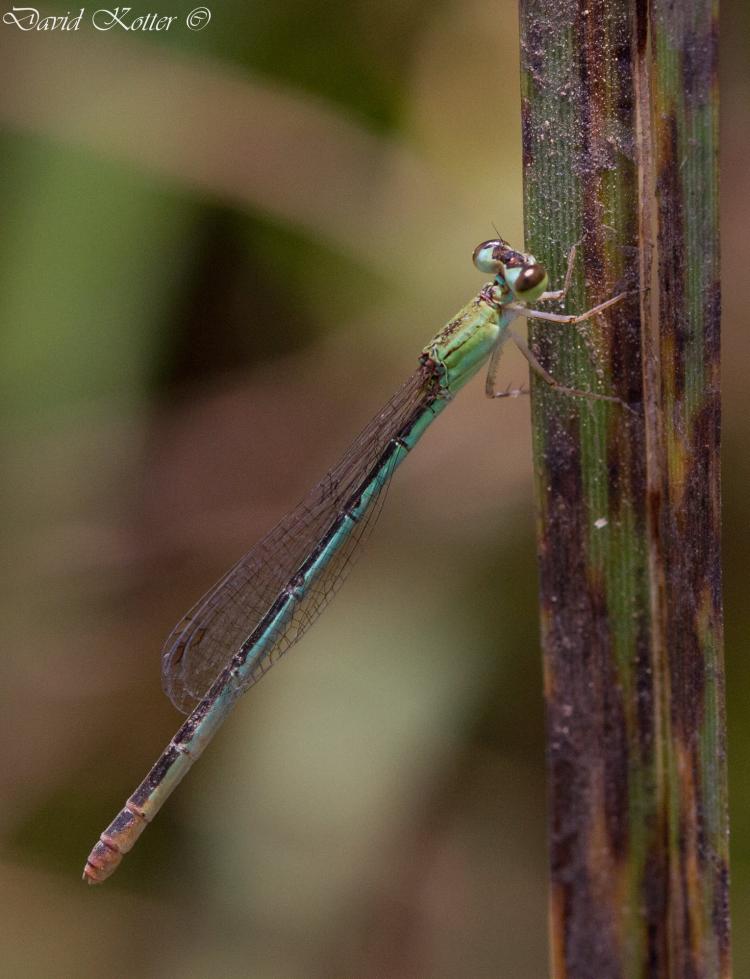
Green form - a relatively rare form. In this form the abdomen and thorax are dark, while the sides of the abdomen and thorax are green. Except for segments 8-10, which are orange, and the black is reduced to spots
Similar species:
The size and the orange tip of the abdomen leave no room to confuse it with any other species in Israel.