
The bat order
The bat order is one of the most diverse among the orders of the animal kingdom.
The smallest bat weighs only about 1.5 g and has a wingspan of about 10 cm, while the largest species weighs about 1.5 kg and has a wingspan of about 1.7 m.
Bats are found in almost all habitats, on all continents (except Antarctica), and make up about one-fifth of all mammal species. Among the special characteristics of the order, the most notable are well-developed flight, one of the main factors in their success, and the use of echolocation - a sense whose operation is similar to that of radar, which will be discussed further below.
In most sources in the popular literature, the division of the bat order into two suborders is presented:
1. Large bats - Megachiroptera
2. Small bats - Microchiroptera
In everyday speech, the large ones are commonly called "fruit bats" and the small ones "insect bats," although in fact fruits and insects are not necessarily a distinctive feature of the menu. Egyptian fruit bat (Rousettus aegyptiacus) is the only representative in the country of the suborder of the large bats. It is indeed considerably larger and heavier than all the insect bats in the country (more than 30 species in Israel), but in fact there are "large bats" (fruit bats) in the world that are smaller than "small bats" (insect bats).
The division into two suborders is based on a theory according to which insect bats and fruit bats have a common ancestor. However, doubts on the subject began to arise already in the 1980s: a surprising morphological similarity was discovered between representatives of the two suborders, and over the years genetic findings placed the fruit bats alongside the insect bats. Today, a new division of the bat order into two suborders is accepted:
Vespertilioniformes - which includes most of the insect bat families known from the traditional division.
Pteropodiformes - a suborder that includes 4 insect bat families and the fruit bat family.
Accepting the new division has far-reaching implications. The existence of a common ancestor with flight capability allows a relatively simple path to be drawn for the development and loss of various traits and abilities in matters of flight and echolocation. By contrast, the new division requires that flight evolved independently in the Megachiroptera, echolocation evolved twice, and more. The Egyptian fruit bat (fruit bat) is unusual among fruit bats in that it uses echolocation, which may indicate how it evolved: citations from two sources dealing with this are included. The third source is among the important ones on the subject of the new division of the bat order. In the bibliographic lists of these articles one can find references to many additional sources:
Pettigrew JD, Maseko BC, Manger PR (April 2008). "Primate-like retinotectal decussation in an echolocating megabat, Rousettus aegyptiacus". Neuroscience 153 (1): 226–31
Holland, Richard A. et al. (Dec 2004). "Echolocation signal structure in the Megachiropteran bat Rousettus aegyptiacus Geoffroy 1810". J Exp Biol 207 (25): 4361–4369
Teeling, E.C.; Springer, M. S.; Madsen, O.; Bates, P.; O'Brien, S. J.; Murphy, W. J. (2005). "A Molecular Phylogeny for Bats Illuminates Biogeography and the Fossil Record". Science 307 (5709): 580–584
In Israel there are 33 species, comprising about one-third of all mammal species in it. Except for one species - the Egyptian fruit bat, which feeds on fruit - the other species belong to what was formerly called the "suborder of small bats." They feed on insects and therefore are of great benefit to humans - they are the main predator of moth species harmful to agriculture. Fruit bats, in tropical areas, are very important in pollination and seed dispersal.
When and where can bats be observed?
Entry into caves where insect bats hibernate is prohibited during the winter season. The reason for this is that insect bats feed on insects, and most insects are less active in winter, when the air temperature drops. Insect bats store a little fat in the fall and feed on it during the long winter, when they greatly reduce their activity. In order for the food reserve to last the bats through the entire winter period, they reduce their metabolism relative to the normal consumption during periods when the bat is active. In this state: a. The heart rate drops significantly. b. Body temperature drops from 40 degrees (in flight) to a temperature close to the cave temperature.
Entering a cave where bats hibernate causes the bats to wake up and causes the burning of a lot of fat needed for them to "get through" the winter safely. After the bats "wake up" as a result of entering the cave, the bats are left with much less fat, and some will be left with too few food reserves, making it difficult for them to survive the winter season!!
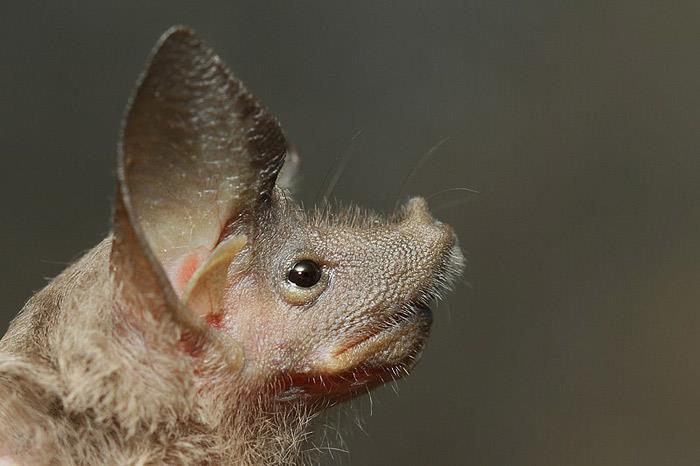
Bats can be observed in all parts of the country, and there are species active throughout the year, even in the heart of the large cities. They are relatively easily seen above bodies of water and can be seen hunting insects around streetlights, which also provide lighting for observation. Fruit bats can be observed as they are attracted to fruit trees (for example, chinaberry) - because of their size, many details can be distinguished even without any assistance equipment.
Most species in Israel are endangered, why?
The fruit bat was once considered a pest - then fruits were picked at a relatively late stage of ripening, when they were still attractive as food for fruit bats (in the 1960s harvesting methods changed). In attempts to exterminate fruit bats - smoking caves with a substance now known to be carcinogenic, within nature reserves, with the active assistance of nature conservation bodies and illegally, as later ruled by a court - entire populations of insect bats were destroyed. The slow reproduction rate of insect bats did not allow them to recover, even after the smoking of the caves stopped. Most species, and as mentioned bats comprise about one-third of all mammal species in Israel, are endangered. The pale horseshoe bat, according to the Red Book, is already extinct. In the article The plight of the fruit bat more information.
How, then, can bats be observed?
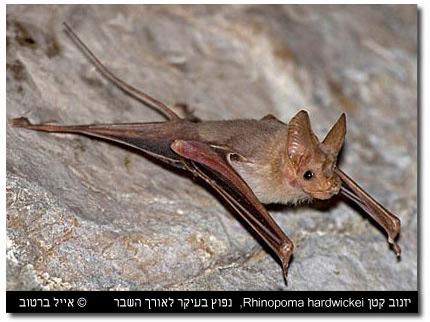
Bats can be observed while they are active – one can locate a fruit tree that attracts fruit bats and watch them from a distance of a few meters without any equipment. Because of their size, many details can be distinguished without any optical equipment. With binoculars, many more details can be seen, and one may even be lucky enough to watch a female fruit bat carrying a pup. Insect bats can be observed as they hunt in flight over bodies of water and around streetlights. If we know of a bat colony, we can position ourselves near it in the evening and watch them against the bright sky as they emerge for activity.
What equipment is needed?
Bats can also be observed without using any special equipment; however, in order to identify and become familiar with bats, one needs a detector, an essential tool for observing bats just as binoculars are essential for observing birds.
What is a detector needed for?
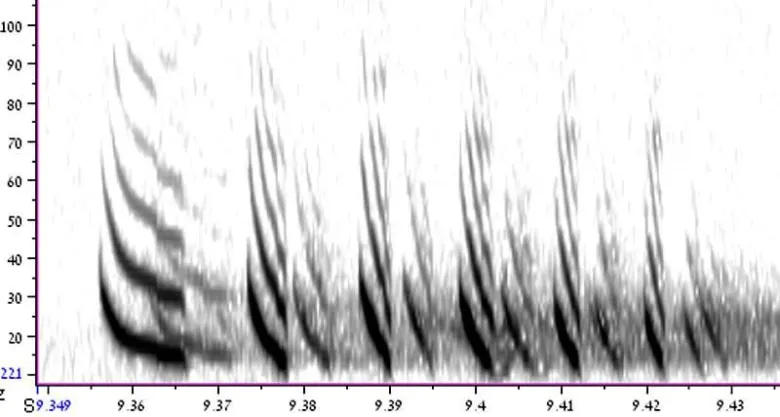
Echolocation, that's the answer

In his book  B. Fenton, gives a brief historical overview of developments in the field, on which the introduction above was written. The book is highly recommended as a first guide, easy and pleasant to read, and includes wonderful photographs – some of them were even taken in Israel.
The information on this page, for the most part, is summarized from the website Bat Conservation Trust
Everyone involved in the field from the Authority, from the Society for the Protection of Nature in Israel, and from academia, contributed to the creation of the website - writers, correctors, updaters, and information contributors - for this we are all grateful.
Many thanks to Ayal Bartov, Afi First and Ronit Orbaum whose photographs are displayed on the website